
Fiber Contractor for Trenching & Fiber Cable Installation
Ridge Rock Excavation is a fiber trenching contractor serving rural fiber builds, data center projects, and telecom routes across Texas, cutting fiber trenches through rock and soil with rockwheel and chain trenchers. We work out of offices in Selma (San Antonio) and Pflugerville (Austin), backed by Wes Clark’s 25+ years of trenching experience.
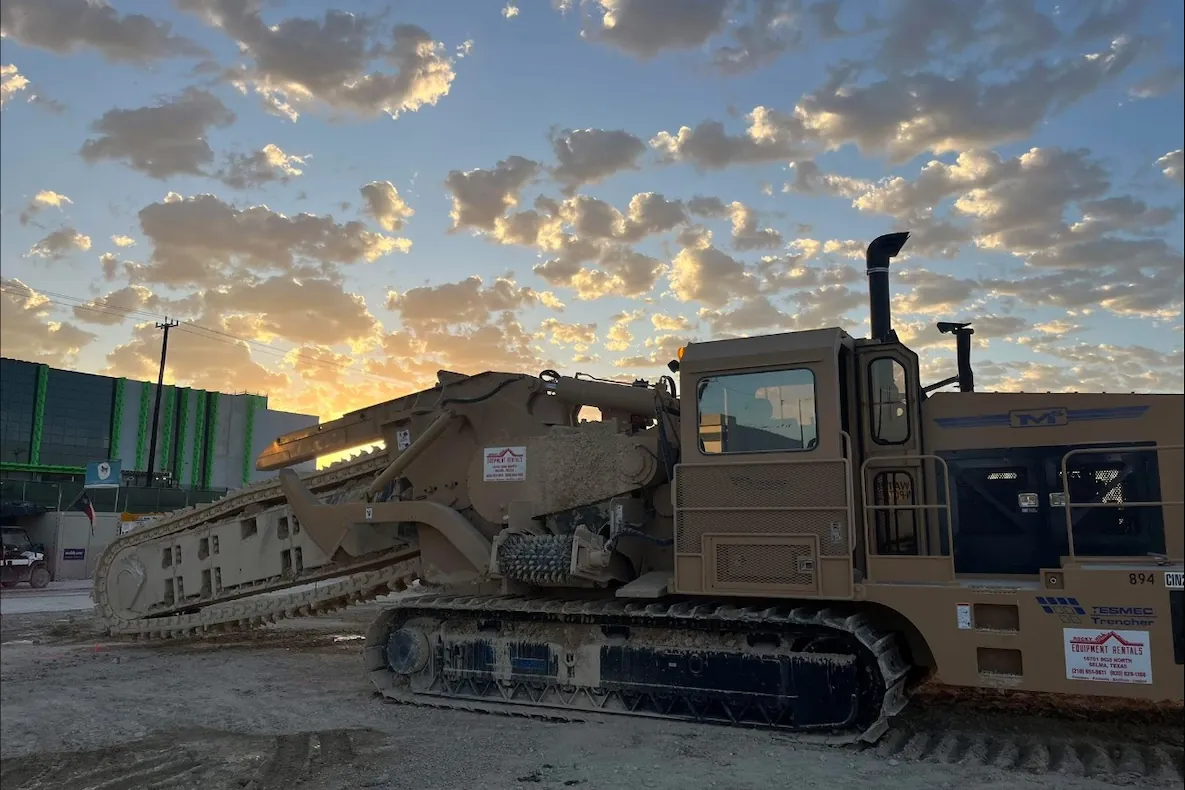
Data Center Fiber & Cable Trenching
Data center campuses depend on underground fiber and power pathways between buildings and out to carrier connections, usually built on tight construction schedules. We trench the routes for data center fiber installation and underground cable and conduit, including through the shallow limestone common along the I-35 corridor.
Rural Fiber Cable Installation
Rural fiber builds mean long, open routes along roads and rights-of-way, often through rock. That is where a trencher outperforms an excavator: one pass cuts a narrow, uniform trench for fiber cable or conduit. Ridge Rock works as a rural fiber contractor for broadband and telecom crews that need production trenching on long runs.
Telecom Trenching & Installation
We trench for telecom installation projects: fiber backbones, last-mile routes, and underground cable for communication networks. Whether you need a cable contractor for a short tie-in or a fiber installer for a multi-mile route, send the plans and we’ll quote the trenching.
Fiber Trenching Capabilities
| Applications | Rural fiber, data center fiber, telecom backbones, underground cable and conduit |
|---|---|
| Equipment | Rockwheel and chain trenchers (see rockwheel trenching) |
| Ground types | Rock, caliche, and soil |
| Service area | San Antonio, Austin, and the I-35 corridor |
Fiber Trenching Questions
How deep are fiber optic cables buried?
The network owner’s specifications and right-of-way permits set the depth. Buried fiber and conduit is commonly placed somewhere between 24 and 48 inches deep, and deeper at crossings or where the permit requires it. We trench to the depth on your plans.
Should a fiber route be trenched or bored?
Open trenching is usually faster and more economical on long, open runs where the surface can be disturbed, such as rural rights-of-way, fields, and new developments. Horizontal directional drilling suits crossings under roads, driveways, and waterways where the surface must stay intact. Many fiber projects use both.
Can you trench fiber routes through rock?
Yes. Rock is our specialty. See rock trenching and rockwheel trenching.
Who calls 811 before digging?
Texas law (Utilities Code Chapter 251) requires the excavator to notify Texas811 at least 48 hours before digging, excluding weekends and holidays, so underground lines can be marked.
Who You’re Working With
Ridge Rock Excavation is run by Kyleigh Clark (owner and managing member), whose background is in construction job costing and financial controls, and Wes Clark (operations advisor), who brings more than 25 years of trenching and heavy-equipment experience on projects across the United States in a wide range of soil and rock conditions. Read more about our team.
Get a Trenching Quote
Send us the location, trench length, depth, ground type, and start date. Or call 210-236-0008.